WEEKEND THOUGHTS # 22
Dear All,
I am very proud to present an article on Orissa History under this Weekend's Thought column. The article is by none other than Dr.Prabodh Kumar Mishra, a great Hostorian and an authoritative figure on the subject matter. It was my privilege to meet him personally this week at Huntsville and I must say, it was a great honour to talk with him. The topics of discussion ranged from Jagganath Temple, Hinduism to NROs and Socio-economic developement of Orissa. It was an educating and very enjoyable experience for me.
In the following article, Dr.Misra explains the evolution of Orissa in a nutshell. I am sure, member of Ornet will find it interesting. Particularly, I couldn't help but mention a posting by Abhaya Nayak and a follow-up by Debasmita Misra, this morning on Ornet; in which someone sought clarification regarding politics of the region. This article tries to throw some light on that subject.
Thank you.
With regards,
Surjit Sahoo July 19, 1996
Huntsville, Alabama
(ssahoo@ingr.com)
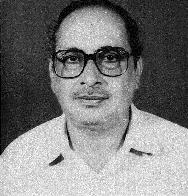
Dr. Prabodh Kumar Mishra was born on January 19, 1937 at Baripada, in the district of Mayurbhanj, Orissa. He did his M.A in History from Revenshaw College, Cuttack in 1957, got his Ph.D. from Samblapur University in 1978 and D.Litt in 1981. He was in Orissa Education Service from 1958 and joined Sambalpur University in 1976. He is a Professor of History at Sambalpur University since 1984. He is also involved with different excavation projects with Government of India at Lothal, Gujurat(1957-58), Ganiapali, Orissa(1977) and Manamunda, Orissa(1980-81). He has also held different positions in numerous other Learned Bodies such as Orissa History Congress, Indian History Congress, Indian Institute of Historical Studies, Indian Numismatic Society, Board of Studies in History, UGC Panel, UPSC etc. He has published several books on History of Orissa and India and is a renowned authority on the subject matter. His contribution to the academic and teaching environment of Orissa is simply, remarkable!

(To this, I must add, he is a very eloquent speaker and if you had a chance to listen to him at 27th OSA Annual Conference at Washington D.C., you'll agree with me. It's true reflection of this very honest and great personality. Dr.Mishra will also be speaking at the Ratha Yatra Festival at Nashville, Tennessee on July 20th, Saturday.)
Creation of Orissa Province
From 1568 Orissa lost her independence and was successively ruled by the Afghans, Mughals and Marathas till 1803 when the British conquered her in three phases. For proper administration the coastal districts of Balasore, Cuttack and Puri and the adjacent tracts were kept under Bengal; Ganjam and Koraput districts were attached to Madras and the Western region including Sambalpur and the Garjat states were placed under the Central Provinces. This political dismemberment jeopardized the language and culture of the Oriya-speaking people who had to face discrimination in the Bengali, Telugu and Hindi dominated regions as a linguistic minority. A time came when Oriya language, script and culture were threatened with extinction. This generated a strong feeling of race consciousness among the Oriya-speaking people leading to a language agitation in the 19th Century which culminated in the formation of separate Orissa province in 1936 on the basis of linguistic homogeneity.
The language agitation in the Orissa Division which began after 1868 due to the provocation of Kantilal Bandopadhyay who propounded that Oriya was not a separate language rather a modified version of Bengali, resulted in the growth of national consciousness in Balasore and Cuttack. The Oriya Vernacular Press fought assiduously to prove the distinctiveness of Oriya language and for retaining it as the medium of instruction. Similar agitation began in 1872 at Bhanjanagar by Janardan Das who demanded the amalgamation of Ganjam region with the Orissa Division, but without success. In 1895, the people of Sambalpur organized a sustained movement for the protection of Oriya language and culture against Hindi chauvinism. They finally demanded amalgamation with Orissa Division as a solution of the language crisis. This demand was accepted by the British Government in 1905 when Sambalpur and the adjacent Oriya speaking tracts were amalgamated with the Orissa Division under Bengal.
But the language crisis in Ganjam and Koraput could not be solved till 1936. The formation of Utkal Union Conference, popularly known as Utkal Sammilani in 1903 under the leadership of Madhusudan Das intensified the agitation for a separate identity on the basis of language. The linguistic survey of G.A.Grierson was helpful in this regard. Some British bureaucrats like Lord Northkote, H.G.Cooke, T.G.Rutherford and Lord Curzon, the then Viceroy were supportive of the cause; but the political unification of the dismembered Oriya-speaking tracts had to wait till 1928 when the Statutory Commission for Constitutional Reforms in India was appointed by the British Government. The Utkal Union Conference represented the Oriya cause before the Commission in a vigorous and consistent form to convince the Commission about the efficacy of a separate province for the Oriya-speaking people. On the recommendation of Statutory Committee, a Boundary Committee for the proposed Orissa Province was constituted. The Boundary Committee submitted a controversial report in 1931 suggesting a province which fell much below the expectation of Oriya people. Finally, a decision was taken in 1933 and the Hubbock Committee was appointed to suggest the method of administrative organization of the new province. The separate Orissa province was created on 1st April 1936 to provide political identity to the Oriya-speaking people. The language agitation of the 19th Century aimed at safeguarding Oriya culture, finally achieved the political goal in 1936; it was a Dream coming true.
Your comments are always welcome...




Ride back to Home Page...