WEEKEND THOUGHTS # 8

Namaskar,
We are back again with another edition of the Weekend Thoughts Column. This time we are very proud and pleased to have an article from one of our international members, all the way from Australia. Please welcome Dr. Prasanta Sahoo. Isn't it amazing that today we are in a world so closely knit together that at the blink of an eye we can communicate with people across the world and stay as a closely knit community so far away from home. When Marshall McLuhan coined the term global village in the 1960s, he perhaps foresaw that the world would be linked together by the internet, connecting together millions of people across the world.
The success of this column depends on everyone of you, our readers on ORNET. We would like to hear from all of you. You do not have to be a writer to write for the column. Just send us an experience in your life and it would be an enlightening experience for everyone. I believe that there is a Poet in everyone of us. Have "him/her" write for you and help make this column a success. If you have children who like to write, or have written poems, stories, essays, send them to us. Everything is welcome. The purpose of this column is to build interest and in the process, make life a wonderful experience. I request you to send your articles to one of us.
"Do not procastinate, for today will become yesterday, tomorrow."
Whoever coined this wonderful quote, conveyed a very powerful message to humanity. One of the most important lessons anyone can learn in life is to be able to manage time effectively. How many of you have wished on the day before the exams that the day were 48 hrs long, or that you had a few more days to complete the project due tomorrow!! Someone has rightly said, "Time is Money". I would say, "Time is Everything". Making the best use of time gives a person the power to achieve anything and everything in life.
The author, Prasanta Sahoo, in this article, presents his views on Time Management, and provides the readers with a checklist to evaluate your individual efficiency and in the process learn to manage time better. Hope this will be very useful to all of us.
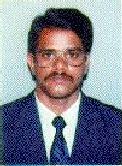
PRASANTA SAHOO

Lecturer (Naval Architecture)
Australian Maritime College
PO Box 986
Launceston, TAS 7250
E-Mail:P.Sahoo@mte.amc.edu.au

Higher Secondary from WB Board of Secondary Education
NSTS Award winner 1973
Naval Architecture from IIT KGP, 1978
Ph.D. in Naval Arch from Wilhelm-Pieck University,
Germany, Nov 1985.
Assistant Manager (Design)- Goa Shipyard Ltd. Goa 1986-1989
Deputy Manager(CAD/CAM) - Goa Shipyard Goa.1989-1992
Was in a committee of experts of Dept. of Science & Tech of Govt.
of India to review reseach work at various academic institutions.
Left GSL in 1992 for Australia on a permanent resident visa
Since 1993, Lecturer at Australian Maritime College (Naval Arch.)
            & Program Leader for Resistance of High Speed Craft at
	    Cooperative Research Centre
Few publications in international journals.

General:

Married to Subhalaxmi Sahoo, a son Pragyandeep (9), daughter Varsha(3).
Sister Minoti Sahoo at Texas, brother Purush Sahoo at Pennsylvania and
brother Trilochan Sahoo at Durham, NC. Father, retd., Prof. Balaram
Sahoo of Chemistry dept IIT KGP, Mother Nishamani Sahoo (housewife).
TIME MANAGEMENT
I decided to write on Time Management since most of us need to achieve certain goals in life while living in this so called western society. The saying goes that once Einstein was asked to explain the difference between Time and Eternity and the answer was: "If I try to explain time it will take an eternity". Having lived in this society for about eight years, I think it is really important how we manage our time and ensure that time works for us instead of working against time.
Time is a valuable but limited resource and is finite and irreplaceable. It is shared with others, used alone, and divided between work, leisure, pleasure and family. Each of us has neither more nor less time each day than everybody else, but how effectively we use that time is a matter of choice. We may allow time to control us so that we are pressured by it and achieve most of our workload in a haphazard way, dealing with tasks and people by reacting to them as they become urgent.
Identifying the cause and finding a solution is easier when you are able to recognise the benefits of the checklist given below :

| I am able to: | Very successfully | Successfully | Unsuccessfully |
| * achieve my goals | Y/N | Y/N | Y/N |
| * share time between work, leisure and other activities | Y/N | Y/N | Y/N |
| * control the telephone | Y/N | Y/N | Y/N |
| * work from a tidy work space | Y/N | Y/N | Y/N |
| * prepare for meetings | Y/N | Y/N | Y/N |
| * handling disruptions | Y/N | Y/N | Y/N |
| * delegate to others | Y/N | Y/N | Y/N |
| * having uninterrupted time | Y/N | Y/N | Y/N |
| * combine tasks | Y/N | Y/N | Y/N |
| * use a diary | Y/N | Y/N | Y/N |
| * set priorities | Y/N | Y/N | Y/N |
| * use a daily work plan | Y/N | Y/N | Y/N |
| * audit my own use of time | Y/N | Y/N | Y/N |
Another important aspect which we should not lose sight of is, the ability to acknowledge change. A great deal of life is experienced as a continual series of changes. Change often means risk and uncertainty about whether or not the new action will work. To implement change it is necessary to become motivated to push towards the changes necessary, and to develop and extend skills necessary to manage time effectively.
When time is managed badly, it can lead to stress. Stress can be a positive force, encouraging change and leading to improved performance. However, it can be destructive, creating barriers to performance and producing 'burn-out'. Everyone experiences stress and response to stress varies between individuals and an individual's ability to manage time would have a significant effect on the unpleasantness that stress creates.
Once your particular strengths and weaknesses in time management are recognised, it is possible to take personal responsibility for change. Improve your skills in time management to accomplish more, receive more satisfaction from your job, lower the sources of stress and have a greater sense of achievement.
The article does not attempt to lecture my more learned friends on ORNET, but tries to address an important aspect in our daily life. The above article was prompted by personal experiences when I arrived in Australia in 1992 with a family in tow and fifty US dollars in my pocket and no job in sight.
Time is precious and yet the most misused in daily life. The importance of time is only realized, when we run into a crisis. A minute planned is a minute saved in life. For effective use of time, one should have self motivation and set goals. Set the priorities and schedule them. And try to accomplish them in an orderly manner. If time is tight, delegate some chores to your family members. Seek the help of your friends if required. Also one can try parallel processing of events if possible. A timely accomplisment brings a great feeling. By not indulging in unwanted things, a lot of time can be saved. In one sentence, for effective use of time, one needs self discipline. It may sound mechanical to follow a schedule in day to day chores, yet it is the best way to accomplish your goal.
Your comments are always welcome...




Ride back to Home Page...